Over 700 Beja militants who voluntarily demobilized after the peace agreement was signed some years ago, with the expectation that they would be given jobs in the Sudanese Army, or in a police force, have been on sit-in strike for almost a month, as they still wait for placements.
From a report on RadioDabanga:
A sit-in strike by 769 demobilised Beja Congress fighters at the
Office of Reintegration and Demobilisation in Port Sudan, capital of Red
Sea state, has entered its 24th day, apparently without any resolution
in sight.
The ex-combatants complain that the government has not absorbed them
into the civil and military services as stipulated in the Eastern Sudan
Peace Agreement (ESPA) signed in 2005.
Hamid Idris, a member of the Legislative Council of Red Sea state,
told Radio Dabanga that the demobilised
Beja Congress fighters are
maintaining their sit-in for the 24th consecutive day without the
national or state governments responding to any of their demands.
Idris cautioned that disregarding the demands of demobilised combatants could lead to an escalation of the situation.
The provisions of the ESPA on security arrangements called for the
return of Beja Congress combatants from Eritrea, where they were based,
and their integration into the Sudan Armed Forces under Disarmament,
Demobilisation and Reintegration (DDR) supervision.
etc
Showing posts with label Port Sudan. Show all posts
Showing posts with label Port Sudan. Show all posts
August 25, 2013

July 6, 2013
Water shortage, so prices rise

File photo.
The water shortage in Port Sudan is prompting many people to migrate to other cities in Sudan. This is overstretching the bus system, that has seen ticket prices soar from SDG80 ($18) to SDG150 ($35) on the black market, while a tin of water has risen from SDG4 ($0.90) to SDG5 ($1.14).
And activist from Port Sudan told Radio Dabanga that with the ongoing water shortage has caused overcrowding and panic at the bus station.
"As there are no clear solutions in sight, most of the population want to desert the city, so the price of a ticket from Port Sudan to Khartoum and other cities has risen to SDG150 ($35)," he said. "Neither the central government nor the state authorities are serious about finding solutions to the water crisis. When the First Vice President committed visited the city, he promised to provide funds as well as ten large tankers to relieve the crisis, but a month has passed without result, and peoples' suffering continues to grow," the activist lamented.
From June 28, 2013. AllAfrica . Additional info in this article about the malnutrition of children. (see below.)
The Medical Director of the Children's Hospital in Port Sudan, Dr Zafaran Al Zaki, has confirmed that there has been an outbreak of acute malnutrition among children in eastern Sudan.
In an interview with Radio Dabanga, Dr Al Zaki said that it is occurring in various segments of society, and affects about 30 per cent of children. She says that this figure can be expected to rise during the period from October to March, attributing it to "economic factors and the acute poverty among people of eastern Sudan".
June 18, 2013
Port Sudan running out of water

Satellite view shows the dam and water reservoir north west of Port Sudan.
Reports from parliamentarians in the Red Sea State suggest that the water supply situation in Port Sudan is desperate.
From Radio Dabanga... as reported on June 12, 2013 at AllAfrica
A member of the Legislative Council of Red Sea state, Hamid Idris Suleiman, has warned of "a real disaster in the coming days" as the water crisis in and around Port Sudan deteriorates on a daily basis.
"The high temperatures are exacerbating the situation, but the Khartoum government has not yet come up with any alternative sources or viable solutions. Suleiman told Radio Dabanga that although the Legislative Council is well disposed to the Khartoum cause, when Red Sea State Governor Mohamed Tahir Aila met with President Omar Al Bashir, "he only came back with promises without solutions".
Suleiman mentions that all Governor Aila returned with was "the National Congress Party's instruction to Legislative Council members not to talk about the water crisis again".
"The members of the Legislative Council make no decisions nor have they any political will other than that of the National Congress Party, which is run by a group headed by Al Bashir, so I did not expect that there would be any solutions forthcoming from the Khartoum government," he said.
Suleiman expressed surprise at "the efforts of the National Congress Party leaders in Red Sea state regarding mobilisation for Jihad".
"By opening recruitment camps, focusing on mobilisation and disregarding the thirst that's threatening their state, they are forgetting the problems of citizens who are about to die of thirst."
Radio Dabanga reported last month that Red Sea State's Ministry of Education was to close schools and kindergartens "due to a lack of drinking water".
April 30, 2013
Pediatric hospital in Port Sudan serves the very poor

An Italian NGO has built an 18 bed pediatric hsopital outside Suakin to serve the children of very poor Sudanese, including local Beja.
There are three outpatient clinics, hospitalisation and sub-intensive care wards, a dispensary, service areas and professional staff, modern equipment and spotlessly clean rooms. As the first free pediatric clinic in Africa, the hospital has been a lifeline for some of the continent’s most underprivileged mothers and their children. Many of the patients here are recent arrivals to a nearby refugee camp. The clinic they use is as good as any that can be found elsewhere in the continent and at the very least offers their children a better chance of life.
Raul Pantaleo, the architect and one of the board members of Emergency and partner in Tamassociati, explains: ‘During the war, a lot of refugees moved to Port Sudan so right now the city is in the middle of nowhere and rapidly expanding. The clinic is based in a huge area of poor people and it’s the only medical facility for children available to them.’ He explains that the clinic, like others built by Emergency, are designed to meet Italy’s own standards of construction and medical requirements, which ensures world class treatment for all its users.
The hospital design includes a garden. The architect says, ‘Gardens are not a marginal part of our designs, they are somehow the centre of our projects. We want in two years for there to be a real garden and real trees. What makes the building friendly is the garden; it’s somewhere that makes them feel comfortable. They can sit down and the kids love to walk on the grass. It’s like a playground for them.’ It is not just children who take advantage of the space: ‘It has become something of a meeting point for the whole community as it’s the only place where there are shadows and water in the daytime and light in the nighttime.’
Port Sudan Pediatric Centre occupies an area close to the ancient city of Suakin and its aesthetics found their way into many visual aspects of the structure. ‘It was completely built with coral stone. Nowadays, everyone in Port Sudan is using concrete bricks but before building we decided to use traditional coral stone and brick for the façade,’ says the architect.
To counter the climatic extremities of Sudan, Pantaleo turned to traditional ways of cooling and as with all Emergency projects, local advice and skills were central to the successful outcome of the project. ‘There are fantastic people in Port Sudan called the Beja, who are desert people and are one of the biggest populations in the region,’ he says. ‘We had technicians come in for the building who worked there permanently with local people. We only used a special technician for finishing, like tiles, but all the rest was built by the local community.’
‘Our buildings are quite simple, but they are still very rooted in their traditions. When it was unveiled the people couldn’t believe there was such a clean and efficient hospital for free, just for them. It was a sort of miracle and a wonderful feeling because they perceived that we really do take care of them. It is a matter of respect,’ he says. To ensure that Port Sudan’s population has some sense of ownership towards the building, Emergency has trained local staff so that the clinic remains a Sudanese enterprise. ‘Apart from a pediatrician and a nurse, the rest are all Sudanese. We want to keep a high standard to the clinic. We don’t just build a hospital and then move away.’
See more pictures and read the full article.
December 5, 2012
Tourism Festival opens in Port Sudan
The British Ambassador to Sudan visited Port Sudan a few days ago, for the opening of the Sixth Red Sea Tourism Festival based in east Sudan. Check out his blog entry. The article starts out like this...
I visited Port Sudan for a few days last week. A 10 hour car journey that began several hours before dawn finally drew to an end as we weaved through the Red Sea hills into a Port Sudan decked out in bunting for the opening of the 6th Red Sea Festival for Tourism and Marketing and caught our first sight of the sea.
The festival was one reason for my visit. We are participating in the exhibition with a display of photos about HM The Queen’s State Visit to Sudan in 1965. It’s part of our celebration of her 60th jubilee this year.

It seemed particularly appropriate to bring the display to Port Sudan because there is an even earlier royal connection here: King George V (the Queen’s grandfather) visited near-by Suakin in 1912.
The British Ambassador, Peter Tibber, also shared his visit with some local Beja people.

I visited Port Sudan for a few days last week. A 10 hour car journey that began several hours before dawn finally drew to an end as we weaved through the Red Sea hills into a Port Sudan decked out in bunting for the opening of the 6th Red Sea Festival for Tourism and Marketing and caught our first sight of the sea.
The festival was one reason for my visit. We are participating in the exhibition with a display of photos about HM The Queen’s State Visit to Sudan in 1965. It’s part of our celebration of her 60th jubilee this year.
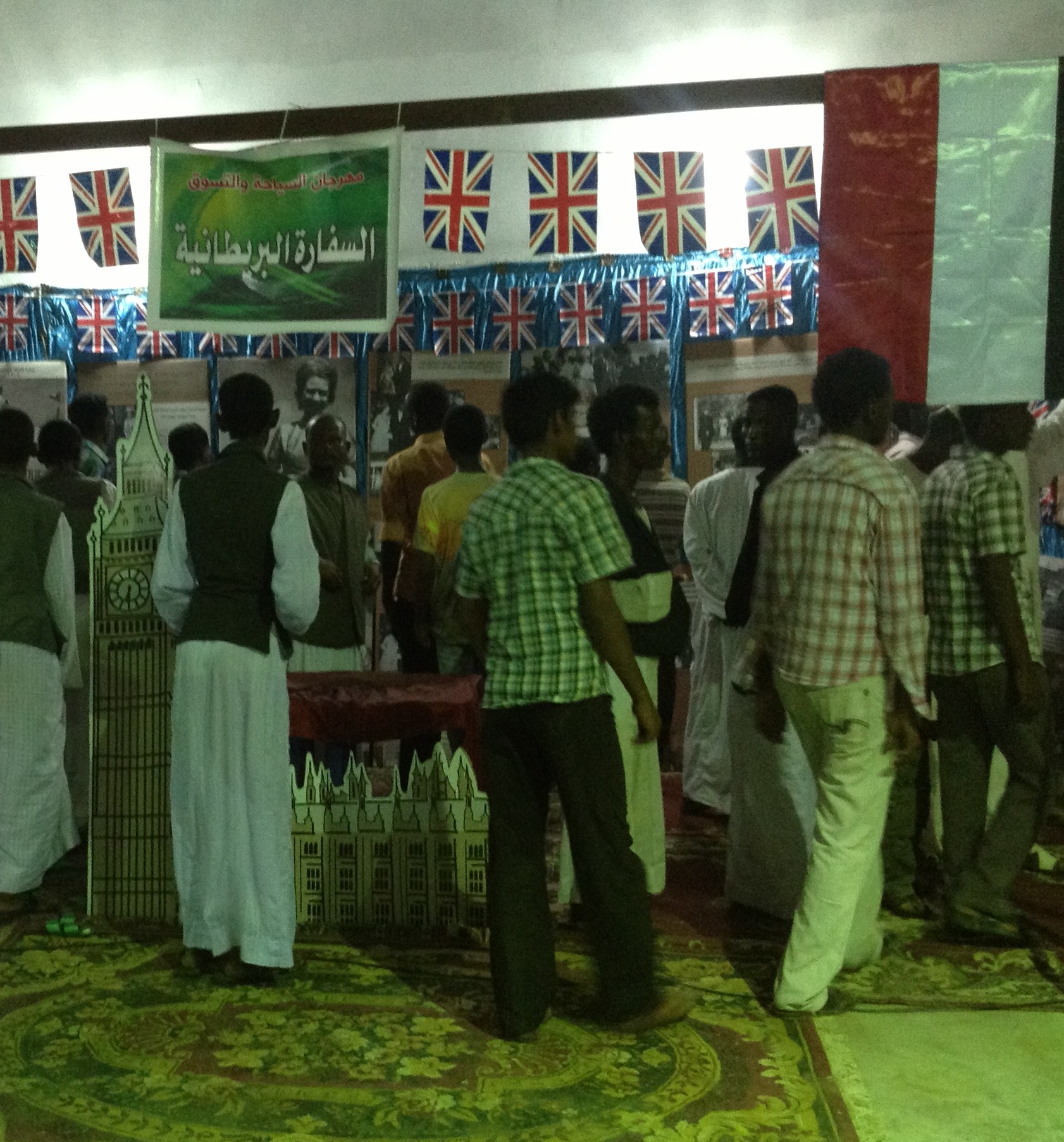
It seemed particularly appropriate to bring the display to Port Sudan because there is an even earlier royal connection here: King George V (the Queen’s grandfather) visited near-by Suakin in 1912.
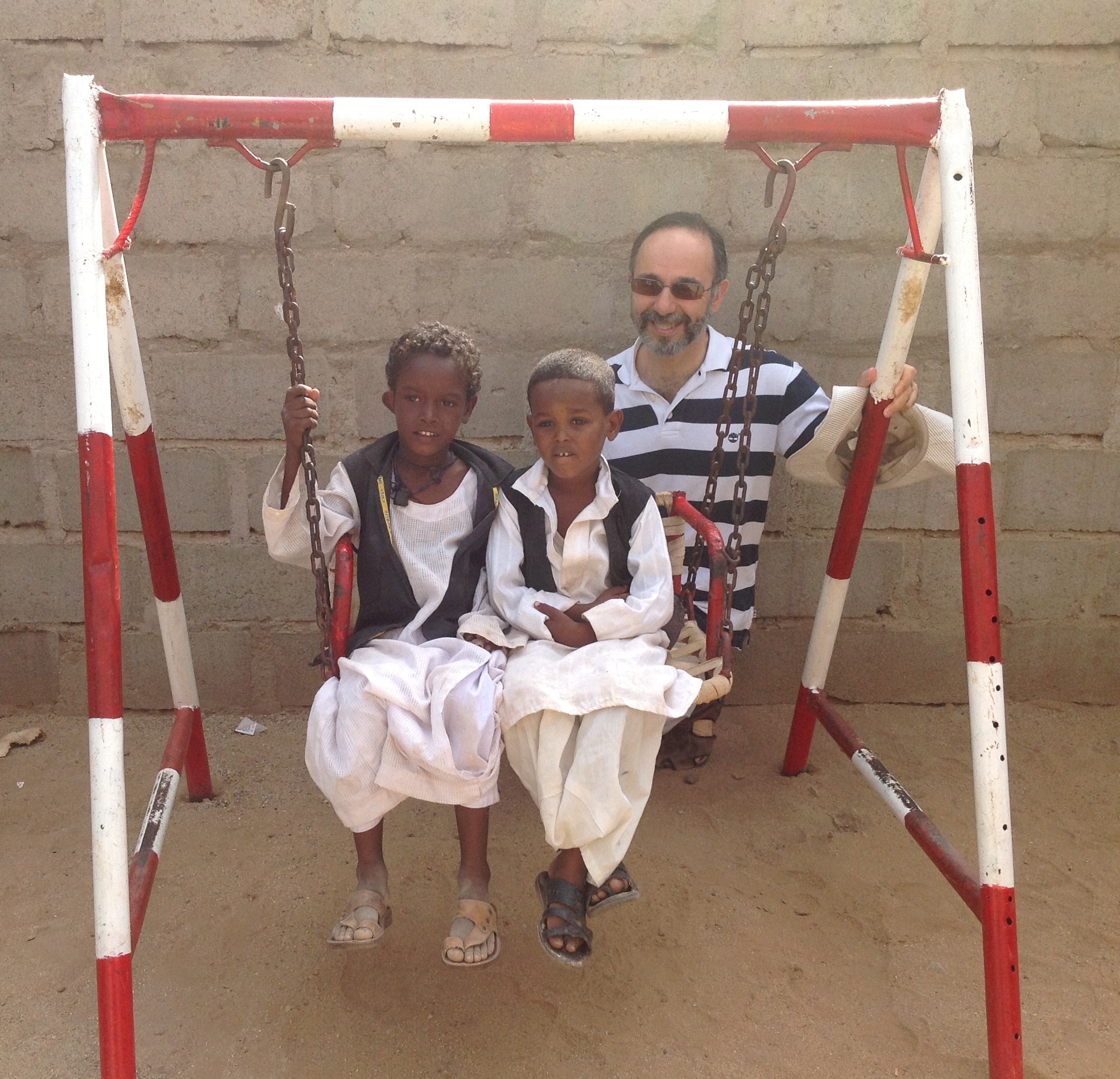
The British Ambassador, Peter Tibber, also shared his visit with some local Beja people.
October 5, 2012
Students demonstrate in Port Sudan at RSU
massive demonstrations in Port Sudan now
Male and female students of the University of the Red Sea out to the street shortly before ...
In the evolution of the events Red Sea University students to go out into the street Thursday afternoon [October 4, 2012] after the administration's intransigence and refusal ... to recognize the Federation of Student Unity ...... after winning the election legitimate university end of April .. The university was under forced closure after violence sparked by students National Congress five months ago after the election ..
It should be noted that the University has opened its doors to students on September 30 and gave students manage their university 24 hours to recognize their fellow forensic, as happened at the University of Sennar ..
And after administration silence students took to the street this afternoon and Asdmoa with police and security services in the city market after being set up to address political rallies and Htfo against the regime and high prices .. And still security vehicles and police combing the streets of the city and around the university .. The revolution continues
from facebook...
Male and female students of the University of the Red Sea out to the street shortly before ...
In the evolution of the events Red Sea University students to go out into the street Thursday afternoon [October 4, 2012] after the administration's intransigence and refusal ... to recognize the Federation of Student Unity ...... after winning the election legitimate university end of April .. The university was under forced closure after violence sparked by students National Congress five months ago after the election ..
It should be noted that the University has opened its doors to students on September 30 and gave students manage their university 24 hours to recognize their fellow forensic, as happened at the University of Sennar ..
And after administration silence students took to the street this afternoon and Asdmoa with police and security services in the city market after being set up to address political rallies and Htfo against the regime and high prices .. And still security vehicles and police combing the streets of the city and around the university .. The revolution continues
from facebook...
September 27, 2012
Beja complain about American politicos in Sudan
Beja citizens blasted US embassy to Khartoum for the way it handles
eastern Sudan issues, reported local media. The Beja representatives to a
meeting held with US charge d’Affaires Joseph Stafford last week in
Port Sudan town criticized the American embassy for holding secret
meetings and closed doors discussions over eastern Sudan issues. A
numbers of Beja sons who attended the meeting told American charge d’
affairs that the embassy holds secret meetings with individuals over
eastern issues without coordinating the matter through Sudan’s
diplomatic channels, reported AL Rayaam newspaper Tuesday, 25, 2012.
Biga attendees have told charge d’ affairs that eastern case could have been disused openly without need for holding secret meetings since what had been discussed was based on justice, stated the newspaper report. Meanwhile according to the newspaper that American’s charge d’ affairs accompanied by two officials from the embassy had broken the meeting without comment on Biga criticism, stated the report.
GMS [Sudan]
Biga attendees have told charge d’ affairs that eastern case could have been disused openly without need for holding secret meetings since what had been discussed was based on justice, stated the newspaper report. Meanwhile according to the newspaper that American’s charge d’ affairs accompanied by two officials from the embassy had broken the meeting without comment on Biga criticism, stated the report.
GMS [Sudan]
May 23, 2012
Beja houses knocked down


Ten houses of block concrete have been knocked down by officials. Over sixty people are now homeless. Last week many houses were also knocked down, and Alrakoba.com reports that over 200 houses have now been destroyed.
Apparently the people did not have proper identification or permits for the house construction, though they did have ownership of the land. The inhabitants were displaced from the South Tokar region because of war.
A few years ago, Tokar area was managed by Beja Congress and Eastern Front forces, which lead to a blockade by Sudanese Armed Forces on agricultural production, so most farms were abandoned since there was no market to sell at. Currently, because of smuggling through the Eritrean border, Sudanese security is very tight in Tokar region at the delta of the Baraka River.
The unpleasant enforcement of government policy took place in one of the slum areas of Port Sudan, in [Box neighbourhoods] #9 and 10 and 11. The Ministry of Urban Planning, Red Sea State was responsible for this event. Many security forces cordoned off the area before the demolition.
Journalists who covered the destruction and removal of houses were prevented from taking photographs. Some houses still had household belongings inside.
https://www.facebook.com/photo.php?fbid=4069603105551&set=o.133279973408087&type=1&theater
May 8, 2012
Port Sudan Research paper

How's life in Port Sudan? Are you trying to understand that city? How do poor people live there? In 2010, researchers explored urban expansion in four cities in Sudan. Their findings were published in January 2011. One of their reports focused on Port Sudan.
The rapid expansion of Sudan’s towns and cities confronts humanitarian and development agencies with new and complex challenges.
Over the past four decades the cities and towns of Sudan have experienced dramatic population growth. Urbanisation has occurred in a context of poor governance, decreasing job opportunities, deepening social and economic insecurity and conflict-induced displacement. Growing numbers of poor and vulnerable urban dwellers live in abject poverty, are vulnerable to a range of daily protection threats and face acute challenges in relation to access to livelihoods, basic services and land.
This latest study by the Humanitarian Policy Group at the Overseas Development Institute explores the phenomenon of urbanisation and its drivers in four cities in Sudan. “City Limits: Urbanisation and Vulnerability in Sudan” contains case study reports on Khartoum, Juba, Nyala and Port Sudan, as well as a Synthesis Report. They analyse the social, environmental and economic consequences of urbanisation, paying particular attention to urban livelihoods, as well as infrastructure and the provision of basic services.
The findings suggest that current international humanitarian and development approaches are not yet geared to respond to urbanisation’s challenges, with the focus predominantly being on assisting rural communities. As a result, the urban poor in Sudan have been effectively left to fend for themselves – largely forgotten by the government and the international community alike.
Over the past four decades the cities and towns of Sudan have experienced dramatic population growth. Urbanisation has occurred in a context of poor governance, decreasing job opportunities, deepening social and economic insecurity and conflict-induced displacement. Growing numbers of poor and vulnerable urban dwellers live in abject poverty, are vulnerable to a range of daily protection threats and face acute challenges in relation to access to livelihoods, basic services and land.
This latest study by the Humanitarian Policy Group at the Overseas Development Institute explores the phenomenon of urbanisation and its drivers in four cities in Sudan. “City Limits: Urbanisation and Vulnerability in Sudan” contains case study reports on Khartoum, Juba, Nyala and Port Sudan, as well as a Synthesis Report. They analyse the social, environmental and economic consequences of urbanisation, paying particular attention to urban livelihoods, as well as infrastructure and the provision of basic services.
The findings suggest that current international humanitarian and development approaches are not yet geared to respond to urbanisation’s challenges, with the focus predominantly being on assisting rural communities. As a result, the urban poor in Sudan have been effectively left to fend for themselves – largely forgotten by the government and the international community alike.
Neighbourhoods
In Port Sudan, some neighbourhoods have a mixed population, while others are populated by a majority just from one tribe. Many Beja live in Dar Al Salaam along with North Sudanese, and members of the Fallata and Hausa tribes. In Al Qadisya, many Beni Amer live, pursuing wage labour job such as water selling or making handicrafts. Educated Beja and government or corporate employees may live in Diem Madina.

Chapters
The 40 page report includes ten chapters.
Chapter 1 Introduction
Chapter 2 History and drivers of urbanisation in Port Sudan
Chapter 3 The policy context
Chapter 4 Governance and leadership in Red Sea State and Port Sudan
Chapter 5 The urban economy and livelihoods
Chapter 6 Land and urban settlement patterns
Chapter 7 Infrastructure, services and the environment
Chapter 8 The social consequences of urbanisation and urban vulnerability
Chapter 9 External assistance in Red Sea State and Port Sudan
Chapter 10 Conclusions and recommendations
One page [p.37] is devoted to a timeline of major events in Port Sudan.
Hosting site.
Main Synthesis report - summarizes the study for all four towns across Sudan.
Port Sudan portion only. pdf download available here for free.
In Port Sudan, some neighbourhoods have a mixed population, while others are populated by a majority just from one tribe. Many Beja live in Dar Al Salaam along with North Sudanese, and members of the Fallata and Hausa tribes. In Al Qadisya, many Beni Amer live, pursuing wage labour job such as water selling or making handicrafts. Educated Beja and government or corporate employees may live in Diem Madina.

Chapters
The 40 page report includes ten chapters.
Chapter 1 Introduction
Chapter 2 History and drivers of urbanisation in Port Sudan
Chapter 3 The policy context
Chapter 4 Governance and leadership in Red Sea State and Port Sudan
Chapter 5 The urban economy and livelihoods
Chapter 6 Land and urban settlement patterns
Chapter 7 Infrastructure, services and the environment
Chapter 8 The social consequences of urbanisation and urban vulnerability
Chapter 9 External assistance in Red Sea State and Port Sudan
Chapter 10 Conclusions and recommendations
One page [p.37] is devoted to a timeline of major events in Port Sudan.
Hosting site.
Main Synthesis report - summarizes the study for all four towns across Sudan.
Port Sudan portion only. pdf download available here for free.
April 14, 2012
Higher dam at Arba'at?
A single source (with an unclear date) has stated that a deal has been signed between Sudan and a Korean construction company to heighten the Arba'at Dam which is 40 km northwest of Port Sudan.
The report says,
Irrigation Minister Kamal Ali said the dam heightening, to be jointly undertaken by Kim Company of South Korea and Danfodio company of Sudan, will raise water output to 15 million cubic meters, enough to meet the city's daily demand.
The project is estimated to cost 4. 5 million dollars.
National Water Corporation's director, Mohammed Hassan Ammar said during the signing ceremony Monday that the dam would enhance the environment of the region and increase its agricultural output.
Evidently this plan or a similar one has been in planning stages for many years. In the book, Climate Change and Adaptation Volume 1, [earthscan, 2008] Neil Leary points out that
Heightening of the dam is expected to divert more water for urban use in the capita city of Port Sudan to alleviate severe water shortage during summer time. But increasing water storage in the dam and diverting more water to Port Sudan will reduce the volume of water spillover that supplies the Arbaat community. Potential adverse effects of reduced water supply to Arbaat include reduced cultivated area, displacement of families, spread and invasion of aggressive mesquite trees into fertile agricultural land, and reduced production of food for subsistence and marketing to urban dwellers in Port Sudan. members of the Arbaat community are petitioning the government through traditional and religious leaders to either take necessary measures to mitigate the adverse impact of the project or, preferably, to drop the idea.
SOS Sahel is a non-governmental agency that was working in the coastal region north of Port Sudan. In their 2008-2009 annual review [page4], they commented on efforts to improve farming in areas downstream of the Arbaat dam.
Our work with traditionally conservative and marginalised Beja communities in Khor Arba’at, Red Sea State, has continued to focus on enabling the Beja to take control of their own livelihoods – through direct provision of tools, seeds, and infrastructure, and through training and community development. We have used earth-moving equipment to rehabilitate 24km of water diversion terraces and 5km of the Hanoiet dam in the Khor Arba’at delta. These water structures have enabled rain-fed irrigation of a larger area of farmland, increasing crop production. We have also provided certified seeds and agricultural tools to 318 of the poorest families – typically, those that are female-headed – and training in skills such as the use of fertilisers and pesticides.
Our work with Beja women to improve their literacy and numeracy and their awareness of gender and health issues has resulted in women reporting to us an increase in their status and confidence. We have also observed increased food production, and a shift from traditional crops such as sorghum and watermelon to ‘cash crops’ such as tomatoes and aubergines, which can be sold in Port Sudan; this has provided the Beja women, in particular, with a means to earn income, which they are able to invest in education and healthcare for their families. An unexpected and positive outcome of this programme has been the return of migrants from urban Port Sudan to rural Khor Arba’at, demonstrating that improving rural livelihoods can reduce levels of urban destitution.

Donkey cart carrying pupils to Kissibyai School, Khor Arba'at [SOS Sahel photo - January 2008]
Education in Khor Arba'at, in the Red Sea State of Sudan, is limited. Boys were having to walk many kilometres to get to their nearest school, and there was no school for girls.
In 2006, SOS Sahel UK set up the only girl's school in the area - Kissibyai School - which also accommodates boys in a separate classroom. To help the pupils attend school regularly, and ease the concerns of parents, we organised a local donkey & cart owner to become the school bus. He is paid monthly from families of the pupils. As a result, regular school attendance has been maintained, especially for girls.
Education in Khor Arba'at, in the Red Sea State of Sudan, is limited. Boys were having to walk many kilometres to get to their nearest school, and there was no school for girls.
In 2006, SOS Sahel UK set up the only girl's school in the area - Kissibyai School - which also accommodates boys in a separate classroom. To help the pupils attend school regularly, and ease the concerns of parents, we organised a local donkey & cart owner to become the school bus. He is paid monthly from families of the pupils. As a result, regular school attendance has been maintained, especially for girls.
March 10, 2012
Oil Spill in Red Sea
From http://www.samaportsudan.com/
According to press reports, Sudan, Monday / 20 Feb. /, occurrence of leakage of large amounts of oil on the coast of Port signs of Sudanese oil exports to the Red Sea.
The newspaper (events) Sudanese published today, the President of the Society for the Protection of the Marine Environment Adm. pension Noordin Mohamed Farah, saying: "The Assembly received a report spill on the coast, and after a field visit to the site make sure its spread in large areas of the sea and beaches around."
Farah and warned of the danger of leakage on marine organisms, adding, "I took samples of raw and frozen will be examined in the laboratory and we expect that the result is shown in the next two days."
The year 2008 witnessed leak large amounts of oil off the signs of the second port on the Red Sea coast, which led to the contamination of a partial spread of the city of Port Sudan, which led to fish migration to distant places and stop the movement of fishing.
According to press reports, Sudan, Monday / 20 Feb. /, occurrence of leakage of large amounts of oil on the coast of Port signs of Sudanese oil exports to the Red Sea.
The newspaper (events) Sudanese published today, the President of the Society for the Protection of the Marine Environment Adm. pension Noordin Mohamed Farah, saying: "The Assembly received a report spill on the coast, and after a field visit to the site make sure its spread in large areas of the sea and beaches around."
Farah and warned of the danger of leakage on marine organisms, adding, "I took samples of raw and frozen will be examined in the laboratory and we expect that the result is shown in the next two days."
The year 2008 witnessed leak large amounts of oil off the signs of the second port on the Red Sea coast, which led to the contamination of a partial spread of the city of Port Sudan, which led to fish migration to distant places and stop the movement of fishing.
January 22, 2012
Red Sea Festival in Port Sudan
Al Jazeera covered some waterfront action, on the sea and on the corniche, as local inhabitants of Port Sudan demonstrated their boats and their ethnic culture.
January 20, 2012
TEDx Port Sudan postponed until March 5?
I thought it was tomorrow/today...??
http://adroub.blogspot.com/2012/01/tedx-in-port-sudan.html
But now the date is in March
http://www.ted.com/tedx/events/4186
January 14, 2012
TEDx in Port Sudan

A one day conference on January 21 to encourage thinking about education as a right for the citizens of Sudan.
Speakers include
- Osama Regaah
Sudanese writer an expert in legal affairs. - Ahmed Sadig
Professional trainer,Interested in youth issues - Anwar Dafa-Alla
Dr. Anour F.A. Dafa-Alla (Aka AnwarKing) , who translated more than 600 TED talks into Arabic, was born in Port Sudan, Sudan in 1978. - Dr. Ghada Kadoda
Workshop Programme Chair at KMCA 2012 - Mohammed Abu-Bakr
Director of “Education Without Borders” - Stephen Musyoka
Social Media Consultant at One Percent Club
- Sir Ken Robinson: Bring on the learning revolution!
- Pranav Mistry: The thrilling potential of SixthSense technology
- George Ayittey on Cheetahs vs. Hippos
December 19, 2011
Investment conference in Port Sudan

Port-Sudan, Dec. 18 (SUNA) - The Second Investment Forum, held in the Red Sea State during December 15-17 concluded sittings Saturday, amid massive participation from the representatives of a number of diplomatic missions accredited to Sudan, businessmen and persons and bodies concerned with investment.
The forum deliberated about the issues of financing, tourism, industry and transport.
The forum issued its final communiqué which included a number of recommendations underscored importance of simplification of investment procedures, provision of necessary funds and development of infrastructures.
The recommendations also called for provision of industrial production input, concentration on the services' enhancement and creation of tourism attraction mechanisms.
The Wali (governor) of the Red Sea State, Dr. Mohamed Tahir Aila, [pictured above] has addressed the conclusion of the forum, affirming the readiness of the government of the state to implement the recommendations and adopting them as guidelines and road map for the investment in the state.
November 23, 2011
Port Sudan harbour jobs - going, going...

Al Jezeera reports that 30,000 jobs are expected to be lost for labourers in Port Sudan. A recently made decision to mechanize the unloading of ships will greatly reduce the need for workers.
The Red Sea State government is interested in helping the workers find alternate employment or create businesses, in order to reduce the negative impact of unemployment on so many people. Government officials from the Ministry of Human Resource Development and the International Labour Organization and the country representative of the United Nations Development Programme and the Microfinance Bank of Sudan and others were meeting to address the real problem.
Officials will explore ideas such as training and education support, and alternate jobs within the Maritime Port Authority.
Hussein Mohamed Khalifa, deputy head of the union longshoremen, said that there is a disregard of the dilemma faced by thousands of workers. He expressed his fear that this may lead to negative reactions.
Workers fear unemployment and the inability to keep up with the cost of living. Grinding poverty may come to some of them.
Story at Al Jezeera [Arabic] [English]
Previous $79 millionUS expansion of Port Sudan Harbour. June 2006.
Port Sudan harbour website
Description of Sudanese ports
November 19, 2011
Education Conference - next January

The TED talks are coming to Port Sudan on January 21, 2012 in Alsalam Hall.
TED conferences are a worldwide phenomena. They offer excellent speakers who talk about their special areas of expertise in technology, entertainment and design. Almost 1000 talks are available in Arabic [subtitles]. People can watch the videos online. They are designed to run only 18 minutes or less.
The plan is that about 1000 participants will come to see the presentations. Topics will be about solutions that work to advance the process of education in rural areas. Urban areas often get good education. How can rural students also get a good education? Perhaps there are strategies or technologies that will show how it can be done.
The hope is that the intellectuals, businessmen and educators will learn from the examples of the speakers and from one another. Can Sudan improve the education of the Beja and all the citizens in the country?
Sourced from Port Sudan Online.
August 4, 2011
May 23, 2011
President Bashir to visit Red Sea State in June
On Friday, May 20, 2010 the governor of the Red Sea State, Mohammad Tahir Eilla announced that President Bashir will visit the region upcoming June. He will inaugurate a number of health and educational facilities.
President Al Bashir will inaugurate of Desalination Plant in Port Sudan, new electrical supplies in Saukin and Sinkat alongside with inaugurating distribution of ambulances, mobile hospital and distributing of up to 50 wheels [wheelchairs/scooters?] for handicapped.
Governor Eilla met in Khartoum with the President to arrange the meeting. He also submitted reports about development in the east. One report addressed preparation for the rainy season in the Red Sea State Another report was on investment and progress of work in the new industrial area in Port Sudan. That report indicated that more than 14 thousand houses have been involved in electrical network.
President Al Bashir will inaugurate of Desalination Plant in Port Sudan, new electrical supplies in Saukin and Sinkat alongside with inaugurating distribution of ambulances, mobile hospital and distributing of up to 50 wheels [wheelchairs/scooters?] for handicapped.
Governor Eilla met in Khartoum with the President to arrange the meeting. He also submitted reports about development in the east. One report addressed preparation for the rainy season in the Red Sea State Another report was on investment and progress of work in the new industrial area in Port Sudan. That report indicated that more than 14 thousand houses have been involved in electrical network.
April 6, 2011
Car destroyed from the air

A small vehicle was destroyed in an attack. Two people in the car were killed. The vehicle was on a local road from the airport to Port Sudan. The event took place at 10pm local time on Tuesday April 5, 2011.
The identity of the airplane is unknown, perhaps a missile, perhaps two helicopters. It apparently flew in from over the Red Sea.
A report comes from AllAfrica.
Reports suggest that the airplane was Israeli in origin, and that one of the people inside the car was a Palestinian [Hamas] military commander.
Subscribe to:
Posts (Atom)
