Showing posts with label Egypt. Show all posts

May 30, 2014

New road between Egypt and Sudan to open


http://www.oneworldonejourney.com/?p=422

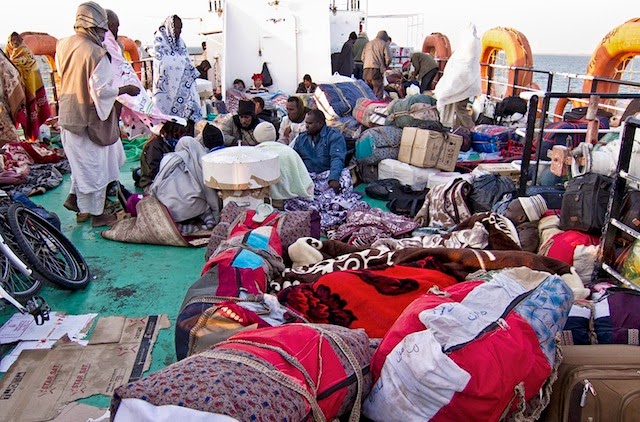
And who will ride the ferries across Lake Nassar? And will they be missed?

One motorcyle traveller says he would be Waiting 7-8 hours and sailing on the ferry from Aswan to for another 17-18 hours. Driving would have taken max. 5 hours.

Khartoum — The Egyptian minister of Commerce, Industry and investments Munir Fakhri Abdel-Nur announced the land crossings between with Sudan will be opened over the next few days to facilitate the flow of trade between the two countries as well as central Africa and Common Market for Eastern and Southern Africa (COMESA).

Egyptian minister of Trade, Investment and Industry Munir Fakhri Abdel-Nur

According to Egyptian news agency (MENA), Abdel-Nur made the revelation at the opening ceremony of the workshop organized by the trade agreement sector at his ministry and the United Nations Development Programme (UNDP) on trade facilitation through the development of ports and border crossings management.

The minister underscored the importance of strengthening the performance of trade and transport corridors between Arab countries to increase the flow of goods and people across borders and to help achieve regional economic integration.

He also stressed the need to eliminate current obstacles and challenges that hampers the development of inter-Arab trade which Abdel-Nur Said accounts for only 10% of the total regional trade.
Observers say that the inauguration of border crossings is held up by disagreements over the Halayeb region which both countries claim.

allafrica

May 20, 2013

Egypt-Sudan highway partially paved now

 Aswan-Abu Simbel road (2007) sourced from skyscraper city

From Aswan south to Abu Simbel, the highway has been paved. Officials are excited about new opportunities for Egyptians. They make no note of the coming loss of the weekly ferry from Aswan to Wadi Halfa along the River Nile.

From AllAfrica: 

The new road will reduce the cost of goods transport by 80% percentage and reactivate the signed agreements between the two states. Sudan had already welcomed Egyptian investments in fields of agriculture, industry and fisheries that will benefit both countries.

Engineer Abdu Rabo Ahmad at the General Authority of Roads & Bridges in Aswan said that the road had been paved from Aswan to Abu-Simbil and gravelled to Qustul port with guiding signs, up to the Sudanese city Wadi Halfa.

On his part the Governor of Aswan city Major General Mustafa Al-sayied stated that Egyptian-Sudanese relations will witness a huge improvement particularly in regard to infra structure projects and rehabilitating land roads, besides improving logistical services in the High dam and Wadi Halfa ports, thus transforming Aswan and Halfa into attractive investment locations.

... the article goes on.


June 5, 2012

New regional map available


New cover! 2012.

Michelin has just published an updated map for the region [April 2012]. Some new highways have been constructed, and South Sudan is another country so borders have changed. Great for a wall poster since it opens up quite large. The previous edition dates from January 2003.

Here's a supplier in the United Kingdom. And another one. Make sure to ask for the latest edition.

In the USA try maps.com

Maptown, in Alberta, Canada...

This is what the old cover looks like. Don't get this one, the map date from 2003...

old cover from 2003

old inside 

April 20, 2012

Beja music website launched


As previously reported here on Adroub.net NEWS a two man band raised $15,000 on kickstarter.com in November 2011. They have finally launched their album of authentic Beja music.

They are based in Cairo, they have booked a few shows to publicly perform their music during April and May, 2012.

You can listen to the tracks from the album online.

http://www.otaakband.tk/

UPDATE: May 1, 2012. A review of this album has been posted at the English language Egypt News.
Seen live, Otaak Band radiate an intoxicating energy that simultaneously fogs your brain and tugs at your feet.
For an album that promises to fuse tribal Sudanese music with elements of the blues, "Bejawiya" is a lot softer than either of its supposed influences would suggest.
While the album’s slick sound may be somewhat at odds with the earthiness it seeks to depict, the real flaw is how cluttered the tracks feel, as if the musicians involved were obligated to meet a quota of instruments.
Heard live, "Ogna" is an urgent call, its latter half setting Abuamna’s lovelorn pleas against what sounds like a raging firestorm of despair. On the album, that fire might as well be a single candle, filmed in soft focus.
Otaak Band claim to be a fusion of sounds, but they’re definitely more Beja than blues, and based on the evidence presented in "Bejawiya," should probably stay that way. And until they figure out whether they want to amp it up or tone it down in the studio, you’d be better off catching a live performance than listening to "Bejawiya."

April 2, 2012

Egyptian Beja protest arrests


Photo and info from


In Aswan Egypt, Ababda Beja have demonstrated in the streets after numerous sheep herders in the countryside east of the Nile were arrested. Apparently they had inadequate personal identification, though they do have permits for raising their animals.

Border guards have declared martial law, and confiscated animals. People from the ababda and albasharet tribes are calling for the provision of proper ID cards for their children, and for proper procedures under the rule of law.

March 21, 2012

Classic history book reprinted!


First published in 1956 by Andrew Paul, a British administrator in Sudan, "The History of the Beja People" has been reprinted by Cambridge University Press, and should be available this month.

A very early review of this book was published in the academic journal "American Anthropologist" in 1956. (Volume 58. Issue 2. April 1956 (Pages 385 - 386)) Here is the complete review [or 2 page pdf download].


Mr. Paul is a British colonial administrator who served in the Sudanese Political Service from 1929 until, presumably, its end in 1955. Of natural interest to anthro- pologists because of its subject, his book is organized on a strictly historical framework, leaving the reader to pick up cultural details in transit. Nowhere before Appendix Two is one given a listing of the tribes which form the subject of the book, and information must be assembled piecemeal as to which tribes speak which of the three local languages; To Bedawie (Hamitic), Tigré, and Arabic. The maps fail to show many of the places mentioned. Interlarded with the narrative are provocative glimpses of the environment, material culture, family organization, and tribal structure-- glimpses which are never blown up into whole pictures. It is clear that Mr. Paul is capable of painting such pictures. He knows, understands, and respects his Beja, without glorifying, idealizing, or vilifying them. He writes easily and with a sense of humor. Now that the historians have been fed, let us hope that he will write a companion book of Beja ethnography.

While awaiting this work, we may gather from A History of the Beja Tribes that the Beja are a mixed bag of some 285,000 nomads and ex-nomads, popularly known as Fussy-Wuzzies, who inhabit some 100,000 square miles of territory barren in various degrees and lying between the frontiers of Egypt and Eritrea, and between the Red Sea coast and the hills flanking the Nile and its tributary, the Atbara River. Living off flocks of camels, goats, sheep, and in favorable places cattle, like most nomads they grow a little grain where and when they are able. Supposedly descended from an old Hamitic-speaking Caucasoid stock mixed with Arab, Tigré-speaking Yemenite, and Negro, they have achieved a striking and well-known racial appearance of their own. Like the Swiss, they speak several languages. Officially they are Muslims.
 The book’s theme is the sluggish stream of local history from the time of the shakily postulated appearance of the Bejas’ ancestors in the Sudan, in the guise of Neolithic pastoralists from the North, through Pharaonic, Ptolemaic, Roman, Axumite, Arab, Turkish, Egyptian, and British periods of influence to the paradoxical present. This history has seen the Beja shift religions several times, while certain tribes also changed their speech. It has witnessed the addition of new genes to their chromosomes, without marked physical change at variance with the needs of their special and highly selective environment. It has seen the addition of a new and particularly destructive beast, the camel. It has failed to record any basic change in Beja cultural attitudes. In 1955 they are just as rugged, individualistic, withdrawn, and completely self-centered as ever. Tell us more, Mr. Paul.

How to buy this book.
This book is printed one copy at a time, as orders come in. It costs about $35. In Canada, try here.
February 23, 2012

Egyptian medical services in eastern desert

A team of about 40 medical personnel will be travelling from Aswan south to Wadi Halfa in Sudan from February 25 to March 3.

During this time they expect to examine about 7,000 people.

Dr. Magdy Hijazi, Undersecretary of the Ministry of health in Aswan said the team has will be doing medical examinations and surgeries free of charge, as well as distributing medicines for various aliments.

Members of the team come from various disciplines from the Faculty of Medicine at Ain Shams University. The convoy will be in addition to previously organized visits to country villages earlier in February.


Source:
شبكة أسوان الاخبارية A.N.N.

January 28, 2012

National Park visitor centre is a unique building

 Visitor Centre for Wadi El Gemal Park [Aga Khan Trust. Archnet.org]

In southeast Egypt, east of Aswan and just south of Marsa Alam, lies the Wadi El Gemal National Park. Inside the large park are interesting landforms, animal and plant life, as well as Roman ruins, significant religious sites, quarries, and indigenous communities of Ababda Beja. The combination of marine and terrestrial habitats represents an important integrated ecosystem.

Berch style house construction [Aga Khan Trust. Archnet.org]

Acacia tree. [Aga Khan Trust. Archnet.org]
The Visitor Center is an interesting architectural building. It is designed for the region, using local materials, and is styled on local house designs and the acacia tree.

The centre is not far from the Red Sea. [Aga Khan Trust. Archnet.org]

The Visitor Center offers snacks, a craft shop, interpretive items and a gathering area for guests. The Visitor Centre is located at the northern entrance to the park, about 50 kilometers south of Marsa Alam. It's located just off the coastal highway. It opened in 2009.

A series of 38 pictures in colour.
Black and white pictures with detailed descriptions.
The architect includes the building in his portfolio.
Really big colour pics, and floor plan.


January 3, 2012

Tourism - into southeast Egypt


Want to explore the coast of the Red Sea is southern Egypt? Travel with a couple of cosmopolitan writers from Cairo as they explore the region around Shalateen.

Though written 18 months ago, the articles are a delightful record of two tourists who get an inside view into a Bisharin wedding, see a sword dance and discover henna body art.
... After two days of haggling with security officials to obtain permits to enter Halayeb, (we never figured out why the government finds it so important to keep the triangle closed) we departed on a punishing, albeit rewarding, off-road drive into the mountains to attend a wedding. There, 150km from the nearest town, we learned about making henna and dancing with swords. Two days later we were walking through Roman temples and past ancient water wells tucked away in the mountains of Wadi el-Gemal, home to the largest population of gazelles in Egypt.

Seven articles in order, as published in the Cairo newspaper, almasryalyoum.com

A hunt for adventure


Shalateen - between a rock and a hard place

The long drive down

The hunt for truths

Beja wedding night in Elba protectorate

Beja style henna method

Farewell to the south

December 2, 2011

Short Bits of Mixed news

The Fifth Tourist Festival for East Sudan was launched in the Port Sudan stadium on December 1. Not enough people were there to watch the displays, so schoolchildren were brought in to see the shows. The festival continues with various events until mid February, 2012. Think of it as an extended advertising campaign for Sudanese to visit the east [internal country tourism.]

Elections in Egypt were successfully held last weekend, and voting equipment was brought in to Hala'ib region from the north. Reports are that hundreds of people were denied the right to vote because they had no proper Egyptian identification.

In April, 2010, Sudanese elections were held, but voting by Hala'ib citizens were not allowed even though attempts were made to include them. Sudan wants to negotiate on control over the Hala'ib region, offering three options to explore administration.

Sit-ins at Manasir [near the new Merowe Dam on the Nile River] continue for 2 weeks now. The Manasir people are fed up with the lack of compensation and care after their towns were swallowed up by the lake behind the dam, from even 5 years ago. Beja have acted in solidarity with these marginalized tribespeople.

A document calling for help for the people of South Tokar is getting distribution. A humanitarian disaster has occurred, and publicity and supplies are requested.

November 7, 2011

PICTURE - Market in Shalateen, Egypt


Click to enlarge. Photo taken July 2011, by Yasser El-Rasoul

October 24, 2011

Egypt to help Sudanese muslims

At an official event where Egypt announced its new ambassador to Sudan, it also announced a program to supply religious teachers to its southern neighbour.

The Ministry of Awqaf is a federal ministry responsible for the management of enowments, or Islamic 'trusts' that are used for the operation of mosques around the country.

Egyptian Minister Mohammed al-Qousi approved a plan to maintain and renovate mosques and to increase the number of preachers and Quran reciters to be dispatched to Sudan.

He also decided to dedicate to the Sudanese a collection of Islamic books in a bid to enrich sound religious awareness among the Sudanese Muslims.

October 22, 2011

Character of Egypt Festival info


Promotional Press Coverage at Egyptolution

Also at http://www.almasryalyoum.com/node/508354

ويهدف المهرجان إلى خلق حلقة تفاهم وتواصل بين سكان الصحراء ووادى النيل والتعرف عن كثب على ثقافة القبائل النوبية، خاصة أن القبائل المشاركة هذا العام تمثل 4 أجناس هى النوبية والبجاوية والعربية والأمازيرية، فضلاً عن خمس لغات هى العربية والتبداوية والأمازيرية ولغتين نوبيتين، مما يعكس الثراء الثقافى والتراثى لتلك القبائل.

ويشارك فى المهرجان 33 قبيلة مقسمة إلى 7 فرق تمثل القبائل من جنوب سيناء وشمال سيناء والعبابدة والبشارية والنوبة والحسابية وسيوه، وسيشهد المهرجان العديد من الفعاليات الثقافية والعروض الفنية مثل عروض الموسيقى والرقص والأغانى القبلية التى تتميز بها كل قبيلة والشعر ورواية القصص.

 The various tribes participated in an opening parade as the festival began.

UPDATE. Some information was published at the twitter feed http://twitter.com/#!/charactersegypt
http://www.charactersofegypt.com appears to be offline just now, but they hadn't updated the website...

October 20, 2011

Celebration of ethnic tribes in Egypt!


From the website of the host organization.

The Characters of Egypt Festival is an annual 3-day encounter of diverse cultures from 33 different ethnic groups residing in Egypt.

From 2008 to 2010, Characters of Egypt was hosted by Fustat Wadi el Gemal, 50 kms south of the Red Sea resort of Marsa Alam. This year, in 2011, the festival will be relocated from the desert environment to the Island of Heisa in Aswan on the River Nile. This new location offers an opportunity for the participants to experience different landscapes and cultures in their places of origin.

An estimated 3,000 guests are expected to participate in this year’s event. These are composed of 350 individuals from a variety of Egyptian ethnic groups, 100 volunteers, 100 journalists, media personnel and press, politicians, ambassadors, business people, academics, artists, visitors from Cairo and Alexandria along with foreign tourists.


The festival envisions creating a platform through which a variety of isolated ethnic groups can converge in a festive, communal atmosphere. The event offers a rare opportunity to link diverse cultures and to inculcate values of mutual respect, understanding, tolerance and equality.

Join us in celebrating Egypt’s cultural diversity on October 27-29, 2011 at Heisa Island, Aswan, EGYPT.

September 14, 2011

Over 300 Eritreans arrested in Sudan


Sudanese security have arrested 317 Eritrean refugees attempting to cross the border to Egypt.
Sudanese police, according to reports, stated that 75 women and four children were detained, 30 km from the Egyptian border.

Read the whole article


June 9, 2011

Total lunar eclipse set for June 15

In the region of the Red Sea Hills, the moon will seem to disappear as the earth gets between the sun and the moon for over an hour. Actually most of east Africa, the Middle east, India and Malaysia will experience this astronomical phenomena. Get the details here.

http://eclipse.gsfc.nasa.gov/LEdecade/LEdecade2011.html


May 9, 2011

Egypt and Sudan to discuss Hala'ib region


Sudan's Foreign Minister Ali Karti visited Egypt last week. Discussions covered such topics as water irrigation and views about the International Criminal Court arrest warrant for Sudanese President Bashir.  Karti ended his trip to Egypt with a number of agreements to activate the freedom of movement, trade, ownership and residence.

For readers of Adroub.net, we were pleased to see that a proposal has been established to deal with the Hala'ib triangle.

The Halayib proposal involves setting up a common administration to develop the area for the interest of the two countries, according to a spokesperson at the Sudanese Ministry of Foreign Affairs, Khalid Mousa. The proposal will be discussed in the near future, he adds.

The Sudanese Ministry of Foreign Affairs also disclosed that Egyptian Prime Minister ordered authorities to release 73 Sudanese arrested in Egypt. Mousa explained that those Sudanese had entered the Egyptian territories when they were digging for gold through traditional mining.

From Sudan Vision.

On the mapping of the Halaib Triangle. Does the USA-based National Geographic make correct maps?

This Sudan Tribune article points out that Minister Karti had previously caused tension with the Egyptians. It describes, [from summer 2010,] some of the same issues between Egypt and Sudan. Worth a read.


April 23, 2011

Hala'ib Triangle rule to be sorted out


In joint meetings between Egypt and Sudan, the Sudanese ambassador to Egypt spoke about the Hala'ib triangle region. Both countries claim rule over the desert region by the Red Sea. It is important because oil companies have wanted to drill in the region. The Beja Bisharin tribe live in the area.

Ambassador Lt. Gen ® Abdul Rahman Sir Al Ketim said that this year will witness opening of three highways that link Sudan with Egypt. He explained that the Halib issue was one of the issues that were not discussed in the past, but at the joint meetings it was being publicly discussed and committees were formed to submit proposals to make Halib an area of bilateral cooperation between the two countries.

Source from  Sudan Vision

March 6, 2011

Forum: Racial heritage of Beja in Egypt


 Beja man on the Red Sea.

On the topic of "Beja, the closest relatives to the Ancient Egyptians," the thread starter states,

The presence of the Beja people can be traced as far back as pre-dynasty times; their proud and uniquely huge crown of fuzzy hair (tiffa) was first recorded in Ancient Egyptian rock paintings.

Egyptologist, Emile Brugsch traced the clan of the Khawr kiji Beja through the matriarchal Female line to the 20th Dynasty.


A series of photos are included.

See also more pics in another thread on EgyptSearch.