May 8, 2013

More water in the east please...


 Red Sea State Wali [Governor] Tahir Aila

The First Vice President of the Republic, Ali Osman Mohamed Taha, has given a directive for more concern with issues of the citizens of the Read Sea State and to focus on support to the development and services projects in the state.

This came during his meeting Tuesday at his office in the Republican Palace with the Red Sea State's Wali (governor), Mohamed Tahir Aila, who briefed Taha on the performance of all the services and development organs in the state, in addition to the projects carried out by the state particularly those relating to support for the poor and low-income families.

The Wali (governor) said in a press statement following his meeting with the First Vice president that they reviewed the security, services and social situations in the state.

He noted that the First Vice President has given a directives for addressing problems that hinder the work process and to speed up implementation of water and electricity projects in all the state's localities.

http://allafrica.com/stories/201305080362.html

April 30, 2013

Pediatric hospital in Port Sudan serves the very poor


An Italian NGO has built an 18 bed pediatric hsopital outside Suakin to serve the children of very poor Sudanese, including local Beja.

 There are three outpatient clinics, hospitalisation and sub-intensive care wards, a dispensary, service areas and professional staff, modern equipment and spotlessly clean rooms. As the first free pediatric clinic in Africa, the hospital has been a lifeline for some of the continent’s most underprivileged mothers and their children. Many of the patients here are recent arrivals to a nearby refugee camp. The clinic they use is as good as any that can be found elsewhere in the continent and at the very least offers their children a better chance of life.
Raul Pantaleo, the architect and one of the board members of Emergency and partner in Tamassociati, explains: ‘During the war, a lot of refugees moved to Port Sudan so right now the city is in the middle of nowhere and rapidly expanding. The clinic is based in a huge area of poor people and it’s the only medical facility for children available to them.’ He explains that the clinic, like others built by Emergency, are designed to meet Italy’s own standards of construction and medical requirements, which ensures world class treatment for all its users.

The hospital design includes a garden. The architect says, ‘Gardens are not a marginal part of our designs, they are somehow the centre of our projects. We want in two years for there to be a real garden and real trees. What makes the building friendly is the garden; it’s somewhere that makes them feel comfortable. They can sit down and the kids love to walk on the grass. It’s like a playground for them.’ It is not just children who take advantage of the space: ‘It has become something of a meeting point for the whole community as it’s the only place where there are shadows and water in the daytime and light in the nighttime.’
Port Sudan Pediatric Centre occupies an area close to the ancient city of Suakin and its aesthetics found their way into many visual aspects of the structure. ‘It was completely built with coral stone. Nowadays, everyone in Port Sudan is using concrete bricks but before building we decided to use traditional coral stone and brick for the façade,’ says the architect.

To counter the climatic extremities of Sudan, Pantaleo turned to traditional ways of cooling and as with all Emergency projects, local advice and skills were central to the successful outcome of the project. ‘There are fantastic people in Port Sudan called the Beja, who are desert people and are one of the biggest populations in the region,’ he says. ‘We had technicians come in for the building who worked there permanently with local people. We only used a special technician for finishing, like tiles, but all the rest was built by the local community.’

 ‘Our buildings are quite simple, but they are still very rooted in their traditions. When it was unveiled the people couldn’t believe there was such a clean and efficient hospital for free, just for them. It was a sort of miracle and a wonderful feeling because they perceived that we really do take care of them. It is a matter of respect,’ he says. To ensure that Port Sudan’s population has some sense of ownership towards the building, Emergency has trained local staff so that the clinic remains a Sudanese enterprise. ‘Apart from a pediatrician and a nurse, the rest are all Sudanese. We want to keep a high standard to the clinic. We don’t just build a hospital and then move away.’

See more pictures and read the full article. 

April 28, 2013

Another minority group oppressed by government

Officials in the Sudan, the almost completely Muslim remainder of the nation from which a Christian and tribal South Sudan broke away from recently, say they won’t be issuing any more new licenses for church buildings.

They explain that what with the “arrests, detentions and deportations” of Christians, some of the existing buildings already are empty.

The announcement came just recently from Al-Fatih Taj El-sir, the minister of guidance and endowments for the nation of Sudan. It was documented in a report from Christian Solidarity Worldwide.

“The minister explained this decision by claiming that no new churches had been established since the secession of South Sudan in July 2011 due to a lack of worshipers and a growth in the number of abandoned church buildings. He added that there was therefore no need for new churches, but said that the freedom to worship is guaranteed in Sudan,” CSW said.

The ministry, however, explained that the announcement comes against a backdrop of a massive repression campaign against Christians in the portion of the old Sudan that now is almost entirely Islamist.

Just before the Sudanese announcement, CWS noted that Catholic priest Father Maurino and two expatriate missionaries were deported.

“The two missionaries, one from France and the other from Egypt, worked with children in Khartoum. According to Fr. Maurino, no reason was given for the deportations,” CSW reported.
But the goal isn’t hard to determine, with Maurino explaining that Christians are in trouble in Sudan since the government sought to Islamize the country and eliminate the Christian presence.

CSW’s own documentation gives evidence, since 2012, of “an increase in arrests, detentions and deportations of Christians and of those suspected of having links to them, particularly in Khartoum and Omodorum, Sudan’s largest cities. There has also been a systematic targeting of members of African ethnic groups, particularly the Nuba, lending apparent credence to the notion of the resurgence of an official agenda of Islamisation and Arabisation.

“The campaign of repression [has] continued into 2013, with foreign Christians being arrested and deported at short notice, and those from Sudan facing arrest, detention and questioning by the security services, as well as the confiscation of property such as mobile phones, identity cards and laptops. In addition to the arrests and deportations, local reports cite a media campaign warning against ‘Christianisation’,” CSW reported.

In February alone at least 55 Christians linked to the Evangelical Church in Khartoum were detained without charge, the report said.

Andrew Johnston, CSW’s advocacy director, said, “The recent spike in religious repression in Sudan is deeply worrying. The minister’s claims of guaranteeing freedom to worship are at odds with regular reports of Christians being harassed arrested and in some cases expelled from the country at short notice. We urge the Sudanese government to end its campaign of harassment against the Christian community and respect the right of all of its citizens to freedom of religion or belief, as outlined in Article 18 of the International Covenant on Civil and Political Rights (ICCPR), to which Sudan is a signatory.”

Sourced from World Net  News

January 4, 2013

BOOK - covers plant use by bedouins in Arabia

Bedouin Ethnobotany offers the first detailed study of plant uses among the Najdi Arabic-speaking tribal peoples of eastern Saudi Arabia. It also makes a major contribution to the larger project of ethnobotany by describing aspects of a nomadic peoples' conceptual relationships with the plants of their homeland.

This volume includes a CD-ROM featuring more than 340 color images of the people, the terrain, and nearly all of the plants mentioned in the text as well as an audio file of a traditional Bedouin song and its translation and analysis.

A review published in Saudi Aramco World (Sept/Oct 2012) notes that the author, James Mandaville has an impressive knowledge of Arabian plant life. "His insights into the nomadic way of life makes this book a treasure for anyone who wishes to know how the Bedouin survive in so harsh and unforgiving an environment."

Bedouin Ethnobotany: Plant Concepts and Uses in a Desert Pastoral World costs $55US.
Published by University of Arizona press

December 22, 2012

Display of colonial Sudan in Durham, UK


http://www.soas.ac.uk/gallery/disappearingheritage/full75420.jpg

British and Egyptian flags flying in front 
0f a motor carriage used during the visit 
to Khartoum of Khedive Abbas Hilmi II. 
Photograph by R. Von Slatin, 1901


A series of photographs that capture the disappearing elements of Sudanese development in the 20th Century will be on display at Oriental Museum of the University of Durham, from January 1 - March 1, 2013.

Many culturally important buildings built during the rule of the British are slowly deteriorating due to neglect of maintenance.  They have been reused for other purposes. Some of the railway buildings have been abandoned to the desert. Frederique Cuventas captured many photos during a six year period up to 2010.

The exhibit is called: Disappearing Heritage of Sudan, 1820–1956: Photographic and Filmic Exploration in Sudan. It documents the remnants of the colonial experience in Sudan from the Ottoman, Egyptian and British periods.

This exhibition has previously been shown at the Brunei  Gallery at the University of |London, UK. For a few months, starting in September 2013, it will be shown at the University of Khartoum.


December 21, 2012

United Nations urged to ban FGM

The United Nations adopted a resolution on Thursday, December 20, urging countries to ban female genital mutilation. The resolution is not legally binding.

The World Health Organization estimates that about 140 million girls and women have received this operation, which removes part or all of the external female genitalia.

At the UN, nations have been asked to approve the resolution: "take all necessary measures ... to prohibit Female genital mutilation and to protect women and girls from this sort of violence.

Egypt has banned clitorectomies, and Eritrea has too.

December 5, 2012

Tourism Festival opens in Port Sudan

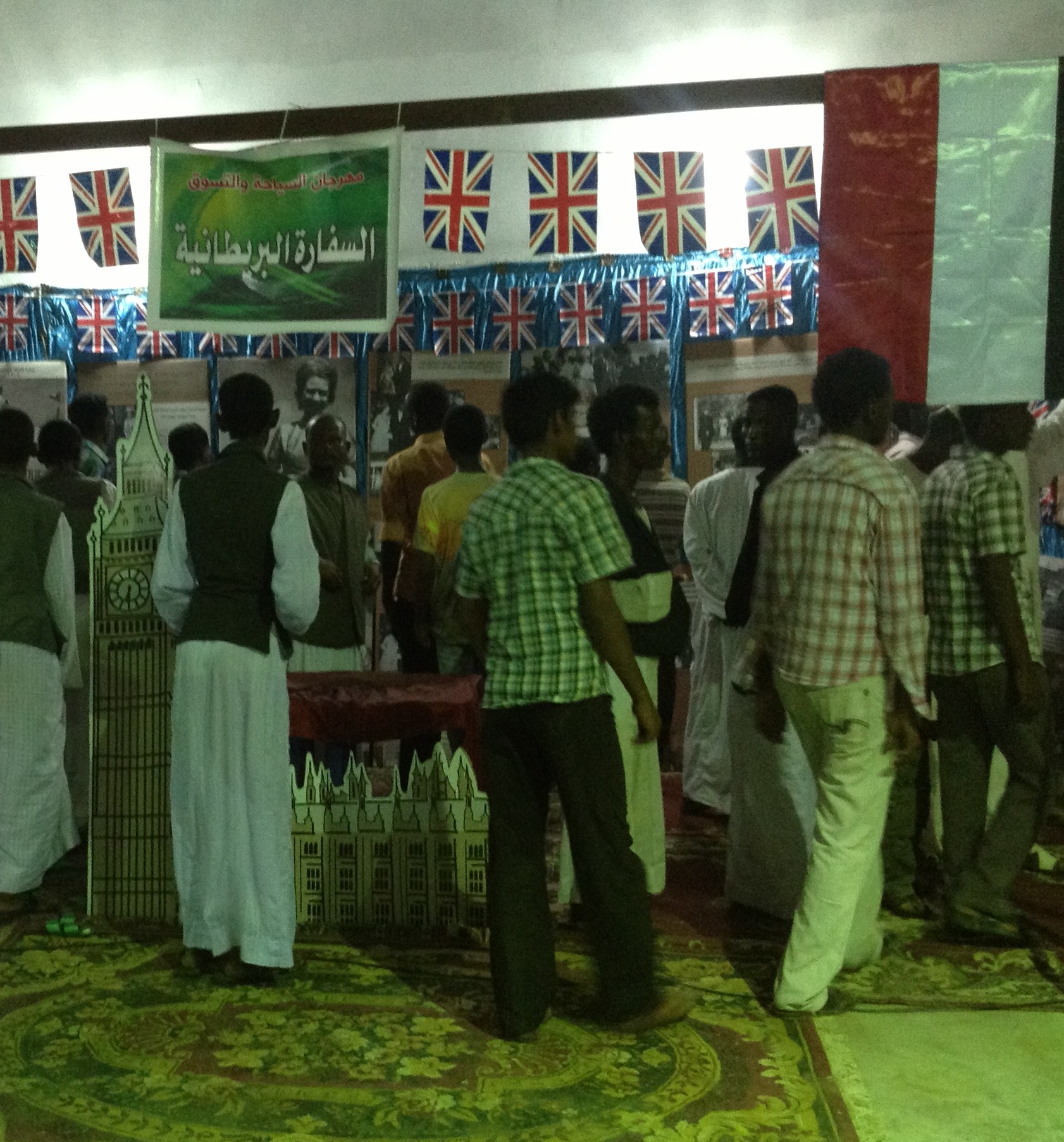
The British Ambassador to Sudan visited Port Sudan a few days ago, for the opening of the Sixth Red Sea Tourism Festival based in east Sudan. Check out his blog entry. The article starts out like this...

I visited Port Sudan for a few days last week.  A 10 hour car journey that began several hours before dawn finally drew to an end as we weaved through the Red Sea hills into a Port Sudan decked out in bunting for the opening of the 6th Red Sea Festival for Tourism and Marketing and caught our first sight of the sea.

The festival was one reason for my visit. We are participating in the exhibition with a display of photos about HM The Queen’s State Visit to Sudan in 1965. It’s part of our celebration of her 60th jubilee  this year.


It seemed particularly appropriate to bring the display to Port Sudan because there is an even earlier royal connection here: King George V (the Queen’s grandfather) visited near-by Suakin in 1912.

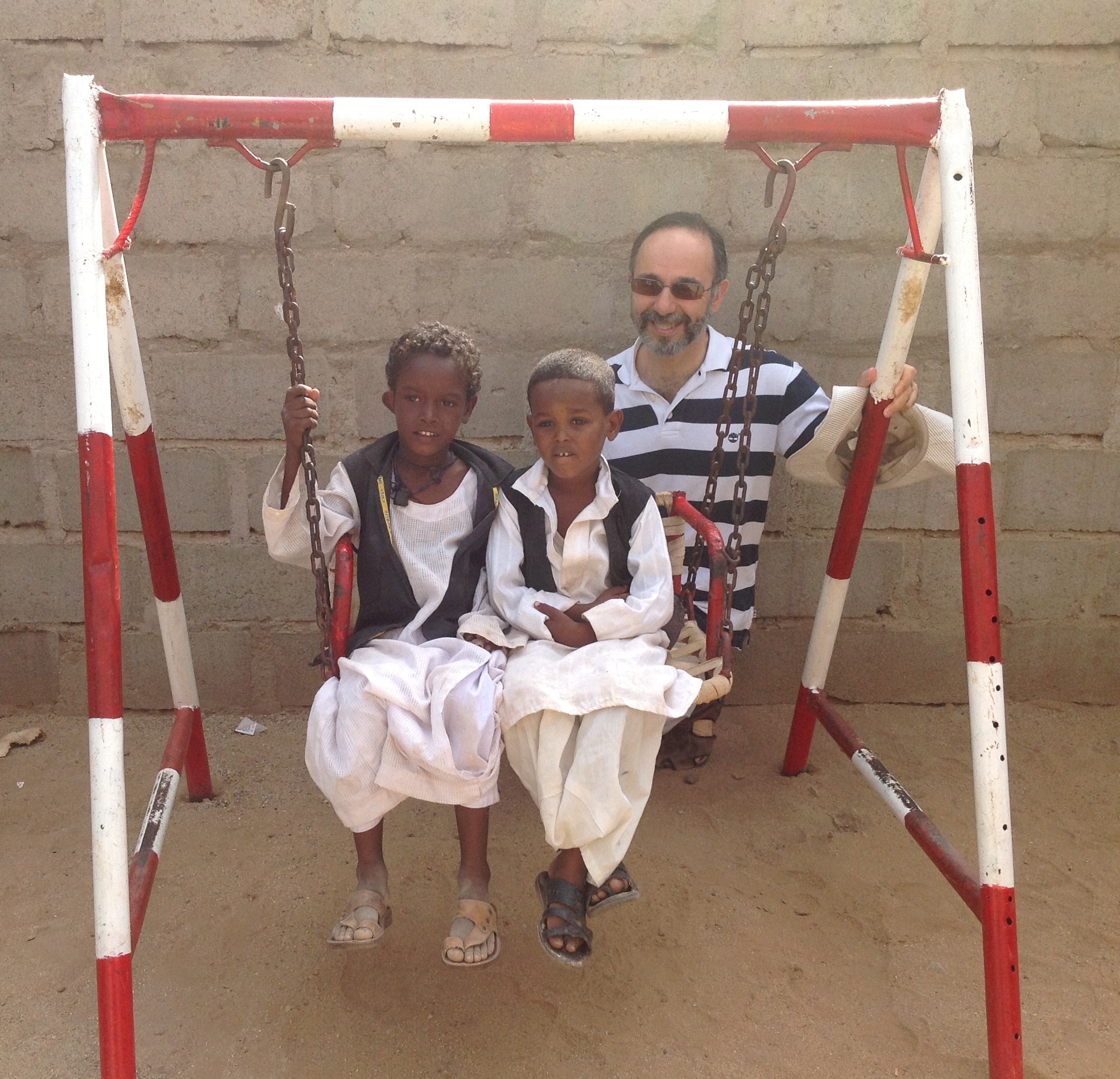
The British Ambassador, Peter Tibber, also shared his visit with some local Beja people.

November 14, 2012

European Conference about East Sudan

Gms: Khartoum, Nov. 7 (SUNA)

Assistant of the President, Musa Mohammed Ahmed, who is currently on a visit to United Kingdom, has gotten acquainted with the British Sports Establishments as well as the British experience in terms of organization of O Sudan Olympic games, recently hosted in London, in order to be utilized in the construction of Sport City.

Meanwhile, the Assistant of the Republic met in London with the community of Eastern Sudan and Beja Tribe in order to know their visions and points of view in regard to supporting the implementation of the East Sudan Peace Agreement as well as its political, economic and social programmes in order to push forward the cycle of development in East Sudan.

The meeting agreed to organize an exceptional Conference for the communities of East Sudan in all the European countries in order to mobilize their contributions in the development and rehabilitation of East Sudan.

 http://gmsudan.com/20121107/east-sudan-communities-in-europe-to-hold-exceptional-conference/

November 9, 2012

Herders and farmers clash in west Sudan


El-Geneina — During a meeting in El-Geneina, West Darfur on Thursday November 8, the High Committee for Protecting the Agricultural Season, headed by Abdullah Hamdan, adopted several decisions to solve the longstanding issues between farmers and herders, Radio Dabanga has learned.

The committee includes the national administration of farmers and herders, head Commissioner and Sultan of Dar-Massaliet, Saad Bahr al-Deen, as well as civil society representatives and government officials.

The decisions include prohibiting of early grazing, which will be implemented from 28 February 2013.
Furthermore, fines of 200 pounds will be imposed in case of deliberate trespassing and damaging of farms, the committee's chairman stated.

Additionally, a decision on a military or police intervention was adopted. The intervention will be requested in case of a dispute between herders and farmers that local commissions cannot resolve on their own, Hamdan added.

During the meeting, the farmers expressed their deep concern about the repeated attacks on their farms by herders and the trespassing onto their lands.


http://gmsudan.com/20121107/east-sudan-communities-in-europe-to-hold-exceptional-conference/

November 1, 2012

Beja leaders meet in Port Sudan

The Central Committee of the Beja Conference Party has concluded session last Sunday [October 21] in Port Sudan under chairmanship of the party’s chairman Musa Mohammed Ahmed. The committee issued recommendations including congratulations to the Sudanese people on signature of the cooperation agreements with the South Sudan on the 27th of September in Addis Ababa, Ethiopia.

The committee members hailed patience of the two countries’ delegations to the negotiations preceded the agreement. They also appreciated efforts of friendly countries and the African Union mediators in boosting lasting peace in the two countries. Central Committee of the Bija Conference Party called for adopting dialogue as a basic means for realizing peace in Darfur, South Kordofan and Blue Nile states.

http://gmsudan.com/20121026/beja-conference-party-concludes-meetings-of-central-committee/

October 5, 2012

Students demonstrate in Port Sudan at RSU

massive demonstrations in Port Sudan now
Male and female students of the University of the Red Sea out to the street shortly before ...
In the evolution of the events Red Sea University students to go out into the street Thursday afternoon [October 4, 2012] after the administration's intransigence and refusal ... to recognize the Federation of Student Unity ...... after winning the election legitimate university end of April .. The university was under forced closure after violence sparked by students National Congress five months ago after the election .. 


It should be noted that the University has opened its doors to students on September 30 and gave students manage their university 24 hours to recognize their fellow forensic, as happened at the University of Sennar ..  

And after administration silence students took to the street this afternoon and Asdmoa with police and security services in the city market after being set up to address political rallies and Htfo against the regime and high prices .. And still security vehicles and police combing the streets of the city and around the university .. The revolution continues

from facebook...

September 27, 2012

Beja complain about American politicos in Sudan

Beja citizens blasted US embassy to Khartoum for the way it handles eastern Sudan issues, reported local media. The Beja representatives to a meeting held with US charge d’Affaires Joseph Stafford last week in Port Sudan town criticized the American embassy for holding secret meetings and closed doors discussions over eastern Sudan issues. A numbers of Beja sons who attended the meeting told American charge d’ affairs that the embassy holds secret meetings with individuals over eastern issues without coordinating the matter through Sudan’s diplomatic channels, reported AL Rayaam newspaper Tuesday, 25, 2012.

Biga attendees have told charge d’ affairs that eastern case could have been disused openly without need for holding secret meetings since what had been discussed was based on justice, stated the newspaper report. Meanwhile according to the newspaper that American’s charge d’ affairs accompanied by two officials from the embassy had broken the meeting without comment on Biga criticism, stated the report.

GMS [Sudan]

August 30, 2012

Marginalized - Again!

Khartoum — A Sudanese presidential assistant representing the eastern part of the country has complained against lack of his inclusion in decision-making.

Musa Mohammed Ahmad, leader of the former eastern rebel Beja Congress (BC) and current aide to President Omer Al-Bashir, revealed his frustration while addressing the opening session of his party's general-congress held in the capital Khartoum on Tuesday.

According to Musa, whose party joined the government as part of a 2006 peace agreement that ended nine years of a low-intensity armed conflict in eastern Sudan, their participation in power is "deficient"
The presidential adviser went on to elaborate saying that he is constantly excluded from decision-making circles and his jurisdictions are limited whether on federal or regional level. He called for the importance of giving his group full jurisdictions and participation in executive authorities.

In his speech, Musa also harked back to the beginning of their armed struggle against the government in mid-1990, saying it was justified by their loss of hope for any recognition of their demands by successive central governments.

East Sudan which comprises the states of Kassala, Red Sea and Al-Qadarif is one of the least developed regions in the country along with the western region of Darfur and the southern regions of Kordofan and Blue Nile.

Musa's complaint of being sidelined in the center of power mirrors those of other rebel leaders from other marginalized regions who struck peace deals with Khartoum. Darfur rebel leader Mani Arkoi Minnawi also cited similar grievances during and after his short stint in power as a presidential assistant before re-joining the rebellion.

President Omer Al-Bashir also addressed the BC conference on Tuesday and was present when his aide complained of limited power participation.
Al-Bashir said in his address that the federal government is committed to fund development projects in the east.

East Sudan peace agreement provided for the establishment of a reconstruction and development fund to receive a total of 600 million US dollars in four years to fund development projects in the region.

Originally posted on August 28, 2012

Sourced from All Africa

July 11, 2012

Ancient Beja - The Blemmyes


Many forums that look at the history of ancient Egypt touch on the role of the people who lived on the southern border of Upper Egypt. An excellent survey of the Blemmye people is republished below, part of a longer post that included discussion about the Aksumite people. The entire thread might be worth a look.

Posted by Mace1.
The Blemmyes (Latin Blemmyae) were a nomadic Nubian tribe described in Roman histories of the later empire. From the late third century on, along with another tribe, the Nobadae, they repeatedly fought the Romans. They were said to live in Africa, in Nubia, Kush, or Ethiopia, generally south of Egypt.

In antiquity
The Greek geographer Strabo describes the Blemmyes as a peaceful people living in the East Desert near Meroe.

Their cultural and military power started to enlarge to such a level that in 197 Pescennius Niger asked a Blemmye king of Thebas to help him in the battle against the Roman Emperor Septimius Severus. In 250 the Roman Emperor Decius took a lot of effort to win over an invasion army of Blemmyes. A few years later, in 253, they attacked Lower Aegyptus (Thebais) again but were quickly defeated. In 265 they were defeated again by the Roman Prefect Firmus who later in 273 would rebel against the Empire and the Queen of Palmyra Zenobia with the help of the Blemmyes themselves. The Roman general Probus took sometime to defeat the usurper and his allies but couldn't prevent the occupation of Thebais by the Blemmyes. That meant another war and the almost entire destruction of the Blemmyes army (279-280).

In the reign of Diocletian the province of Lower Aegyptus (Thebais) was again occupied by the Blemmyes. In 298, Diocletian made peace with the Nobatae and Blemmyes tribes, agreeing that Rome move its borders north to Philae (South Egypt, south of Aswan) and pay the two tribes an annual gold stipend

The Blemmyes occupied a considerable region in current day Sudan. There were some important cities like Faras, Kalabsha, Balana and Aniba, and they were all fortified with walls and towers of a mixture of Egyptian, Helenic, Roman and Nubic elements.

Their culture had also the influence of the Meroitic culture, and so, Blemmyes religion was centered in the temples of Kalabsha and Philae. The former being a huge masterpiece of Nubian architecture, where a solar lion like divinity named Mandulis was worshiped. Philae was a place of mass pilgrimage with temples for Isis, Mandulis and Anhur, and where the Roman Emperors Augustus and Trajan made many contributions with new temples, plazas and monumental works.

- - - 

With the death of Cleopatra in 30 BC, Egypt became part of the Roman Empire. The Roman attitude toward the nomads was very different from that of the Greeks: Repulsed by their wild-haired appearance, the Romans regarded them as scarcely more than another kind of desert beast, and treated them accordingly. The nomads began raiding Roman territory and trade routes. By the latter half of the third century of our era, the Blemmyes had united sufficiently to present Rome with a challenge. According to the fifth-century Palestinian historian Eusebius of Caesarea, the Blemmyes overran the Nile Valley in 268, from Syene (Aswan) all the way to Ptolemais, near modern Sohag, and it took the Romans years of bitter campaigning to drive them back into the desert.

From the third to the fifth centuries the Blemmyes continued to threaten Roman hegemony in the region. In his De Bello Persico, the sixth-century Byzantine historian Procopius recorded that in 284, Emperor Diocletian, faced with continuous Blemmyan conflict, formally relinquished to the Blemmyes jointly with the Nobadae, their rivals, a 250-kilometer (155 mi) stretch of the Nile known as the Dodekaschoinus, which stretched from Syene south to near the present Egyptian Sudanese border. In addition, Diocletian arranged to pay annual tribute to the Blemmyes, and he allowed them access to their favored shrine of Isis at Philae (near modern Aswan), as well as the right to have their own priests in residence there.

Although Diocletian's appeasement did not end Blemmyan raids, the Blemmyes did for a time respect the border at Syene. But by the latter half of the fourth century the Blemmyes were de facto rulers of the Nile Valley far beyond that point. In a contemporary letter, Blemmyan ruler Kharachen assured his administrators at Tanare (some 240 kilometers, or 150 miles, north of Syene, near modern Luxor), "If the Romans make difficulties and do not pay the ordinary tribute, neither the phylarch nor the hypotyrannos [Blemmyan authorities—the Blemmyan language of state was Greek] will prevent you from compelling the Romans to pay it." Interestingly, although the Blemmyes controlled much of the Upper Nile for nearly three centuries, they did not become a settled people. They remained desert-based throughout, interested only in dominating their peripotamian subjects.

The situation changed dramatically in 536, when Emperor Justinian outlawed pagan worship and ordered the removal of the idols at Philae. Outraged, the Blemmyes resumed their raids. Four years later, their hold on the Dodekaschoinus was broken—but not by Rome. Silko, the newly Christianized king of the northern nubian kingdom of nobatia, led an army north, and defeated the Blemmyes so thoroughly that they relinquished all of the Nile and retreated to the desert. The end of their hegemony marked the final blow to paganism in Christian Egypt.

Today, the descendents of the ancient Medjay are part of the Muslim Beja nation.